4 min read
SMF 0.9: in-app review, remote config and feedback
SMF 0.9 generates Flutter apps that ask for a store review, read Remote Config, require an update, take feedback by email and report to Sentry and PostHog.
By Yevhen Beshkarov
- release
- firebase
Say My Frame (SMF) generates Flutter apps from independent modules. Version 0.9 is out on pub.dev, and it is about what an app needs once it is in the stores: a review in the store, values that you change without a new version, a way to keep old versions out, mail from your users, and crash reports and analytics outside Firebase.
dart pub global activate smf_flutter_cli
smf create my_app -m home,settings,in_app_review,firebase_remote_config,update_required,email_feedback,sentry,posthog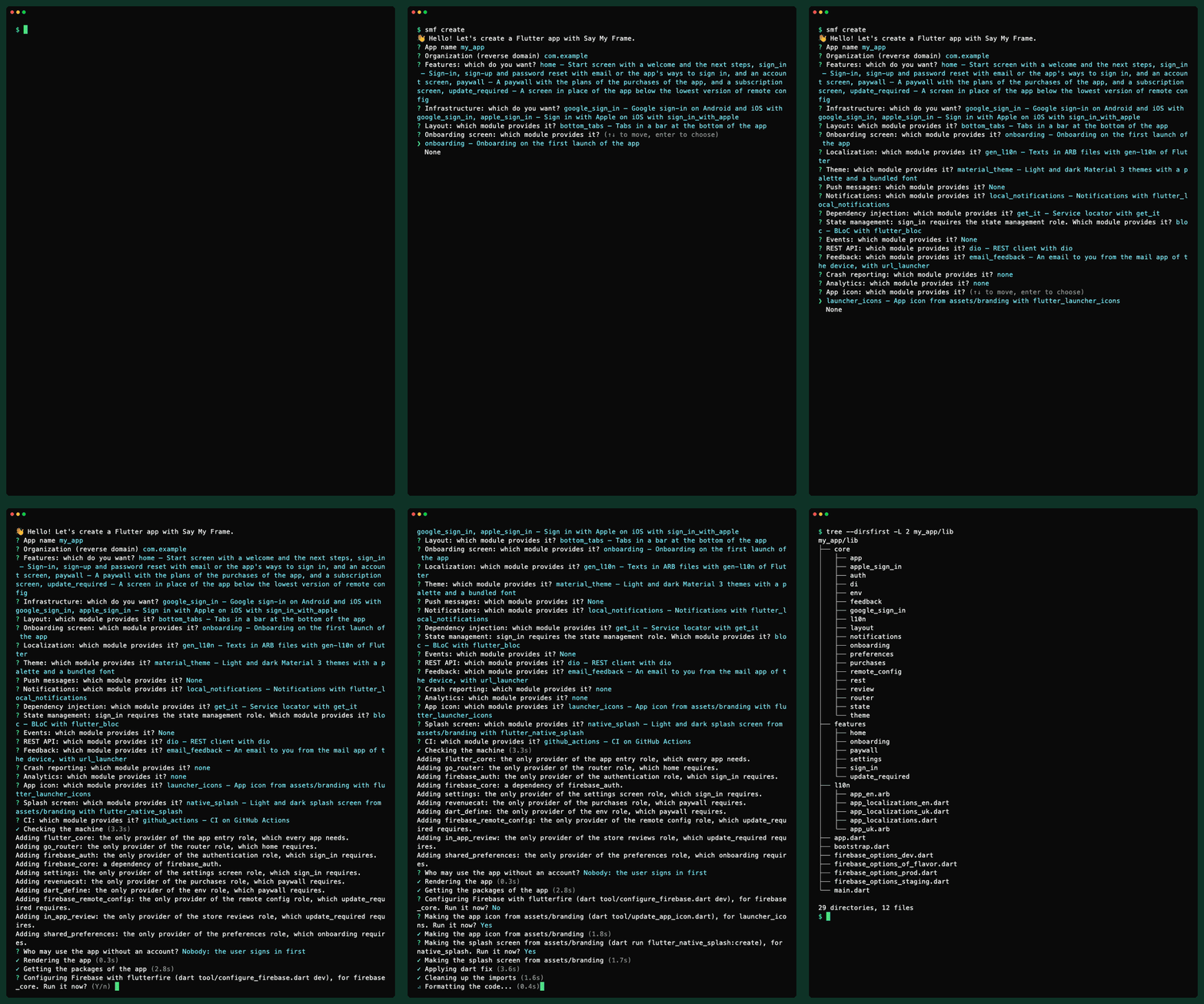
smf create adds the modules that these need, such as firebase_core, go_router and dart_define. As before, you get a regular Flutter project with no SMF package in its dependencies, and SMF never touches it again.
A review in the store, at the right moment
in_app_review asks the store for its review dialog only when your code asks for it, at a natural break such as a finished task:
unawaited(appReview.requestIfDue());The app never asks on its own. A review is due from the third launch and three days after the first one, at most once per version and once in 14 days, and never in the flow of a guard of the routes, such as the onboarding. So you can call it after every finished task and leave the counting to the app.
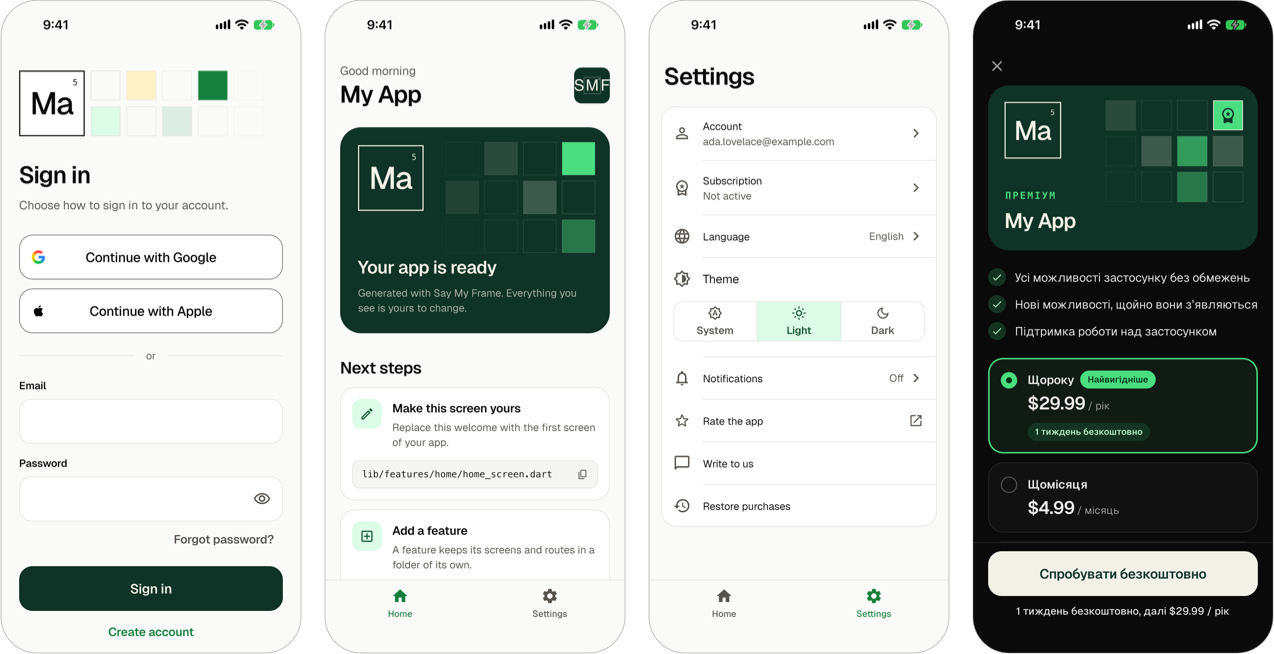
In an app with a settings screen, the row "Rate the app" opens the page of the app in its store. On iOS that needs the App Store ID of the app in REVIEW_APP_STORE_ID of .env.
Remote Config without a wait at the start
firebase_remote_config gives the app appRemoteConfig. Each module declares its parameters with a type and a default, and the app reads them through typed getters, such as the minimum version of update_required:
final minimum = appRemoteConfig.value.updateRequiredMinimumVersion;The start never waits for the network. The app starts with the defaults and with what the device kept from the last fetch, and it picks up the values that you publish while it runs.
Update required
update_required shows the screen "Update required" in place of the app while its version is below update_required_minimum_version of Remote Config. You raise that value in the Firebase console, and the old versions stop at the screen.
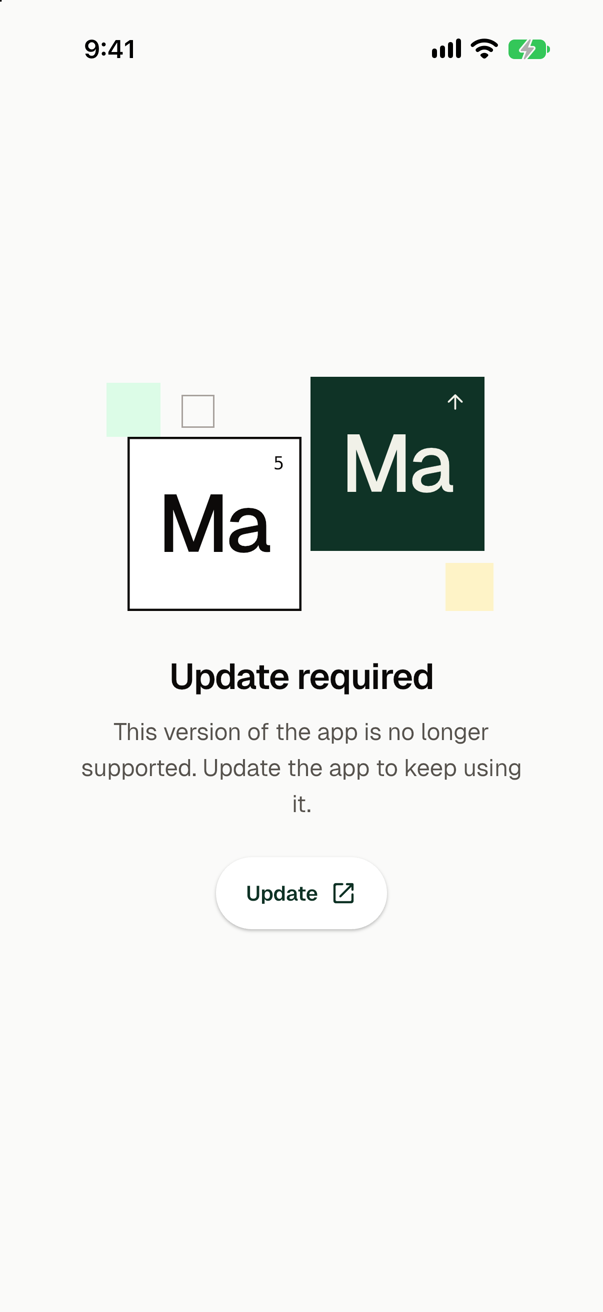
The button opens the page of the app in its store, and until the user taps it, the screen has no way into the app. From then on, or at once when the store page did not open, it also offers "Not now" for that launch. So a minimum version that you set too early never locks anyone out.
Mail from your users
email_feedback adds "Write to us" to the settings screen. It opens a new mail to the address in EMAIL_FEEDBACK_ADDRESS of .env, with the version of the app, the system and the device below the message. Without an address the row is hidden. Where no mail app opens the mail, as on the iOS simulator, a sheet shows the address with a button that copies it.
Sentry and PostHog
sentry reports crashes to Sentry, and posthog sends analytics to PostHog. Each works on its own or next to Firebase Crashlytics and Firebase Analytics, and keeps its keys in .env.
With --analytics-collection=off, an app collects no analytics until its code turns collection on, for example once the user has agreed. Every analytics provider remembers that choice across restarts. A run in a terminal asks about it, and the default stays on.
Smaller changes
- In an app with
blocorriverpod, a widget reads what SMF keeps for the app, such as the theme mode, the language, the session or the values of Remote Config, from a cubit or a provider of its state manager. - When the start-up of an app fails, the app shows why instead of staying on the splash screen.
- A release build of an app with keys in
.envstops with an error when the command does not give it their values. - A link that no route matches shows a screen in the language of the app, with a button back to its start.
- A new app analyzes clean and builds for Android on Flutter 3.50.
Upgrading from 0.8
- Apps generated by 0.8 stay as they are, since SMF generates an app once.
- An option of
smf createthat takes one value, such as--org, is now a usage error when the command line gives it twice. - If you write modules,
smf_contractsandsmf_pipelinechanged: for example, a provider of the app entry shows the screen of a failed start, and a provider of the router shows the not-found screen of the role.
The full list is in the release notes of SMF 0.9.0 on GitHub.
What comes next
Next on my list are ads, with the consent that they need. There are no dates: SMF is a side project. If you have a module in mind, tell me on Discord or in GitHub Issues.
SMF generates Android and iOS apps for Flutter 3.44 or newer and Dart 3.12 or newer. The documentation starts with installation and your first app, and the code is on GitHub.